About us
Research Training Group “Situated Cognition”
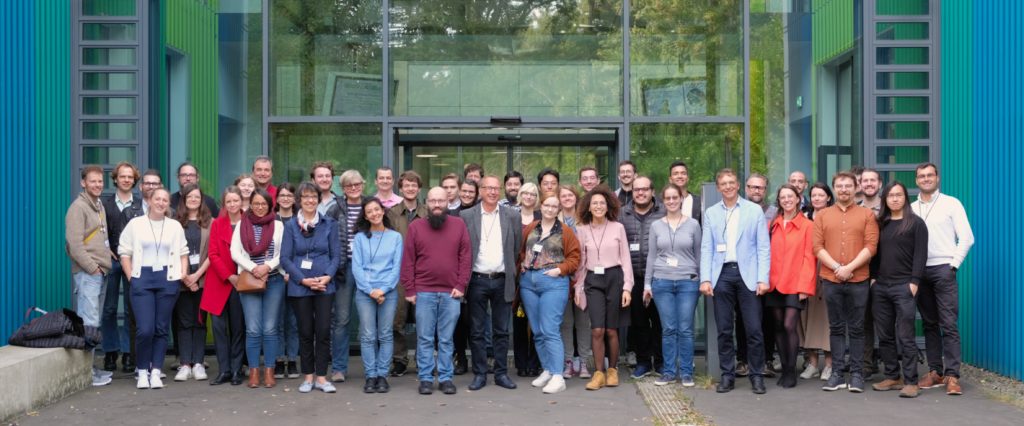
The Research Training Group (RTG) “Situated Cognition” connects philosophy of mind and cognition with empirical research in cognitive science, identifying deficits in traditional conceptions of the human mind and refining and enhancing existing conceptions by drawing on new developments in cognitive science that have not yet made their way into the prevailing philosophical approaches. In particular, the goal is to assess the explanatory potential of four leading paradigms in current cognitive science, usually referred to by the labels “embodiment,” “enactment,” “embeddedness” and “extendedness,” especially with regards to the central cognitive phenomena of perception, agency, emotions and social and linguistic understanding.
The RTG was based at Ruhr-University Bochum and Osnabrück University. Initiated in 2017 and ending in 2026 after 3 successful cohorts, this DFG-funded research group has worked towards a better understanding of the situated nature of the mind. The group guided 3 cohorts of 12 doctoral students through each of their very own PhD projects. Each cohort was characterized by a highly international group, a diverse range of topics and methodologies as well as an interdisciplinary approach. For our events, including international conferences, workshops, and spring schools, we regularly invited established international speakers, while explicitly embedding structural diversity and equality measures, directly into our workshop programs.
Since research on mental phenomena has become a decidedly interdisciplinary endeavor over the past decades, our objective was to systematically integrate representative empirical studies into the RTG’s philosophical framework. This architecture reflects our deep conviction that only a joint effort and the interplay between empirical and philosophical research can provide us with an adequate account of cognition and thus the human mind.
As of mid-2026, the RTG proudly looks back on a research output of already more than 200 publications, many of which are individual or collaborative articles among students, as well as joint work with the PIs. You can find the RTG’s publications here.
Beschreibung des wissenschaftlichen Programms
Werden kognitive Prozesse allein durch neuronale Aktivität bestimmt oder können auch unser Körper, Werkzeuge, unsere physische Umgebung oder das soziale Umfeld wesentliche Elemente von Kognition sein? Dieser Frage widmet sich das im Juni 2017 gestartete interdisziplinäre Graduiertenkolleg „Situierte Kognition“ an der Ruhr-Universität Bochum und der Universität Osnabrück. Unter der Leitung von Prof. Dr. Albert Newen (Sprecher, Philosophie, Ruhr-Universität Bochum) und Prof. Dr. Nikola Kompa (Stellv. Sprecherin, Philosophie, Universität Osnabrück) sind insgesamt 12 Projektleiterinnen und Projektleiter beider Universitäten aus Philosophie, Psychologie und Neurowissenschaft an dem Graduiertenkolleg beteiligt. Für die interdisziplinäre Forschung und die Ausbildung der insgesamt 12 Doktorandinnen und Doktoranden hat das Kolleg 3 Millionen Euro für zunächst viereinhalb Jahre von der Deutschen Forschungsgemeinschaft zur Verfügung gestellt bekommen.
Link zum vollständigen Artikel
Third cohort (2023-2026)
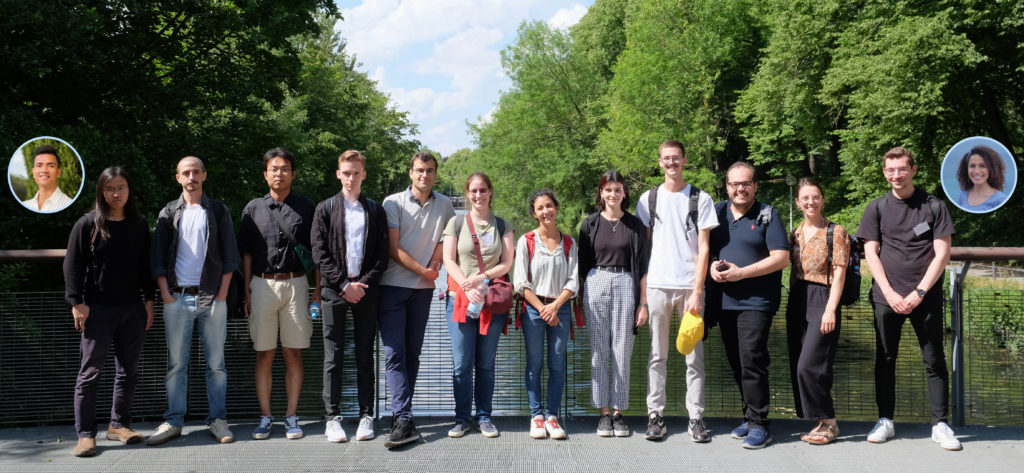
Our third cohort of PhD-researchers will both extend work by our previous cohorts as well as explore new fields and questions that have been left unattended thus far. By bringing together several disciplines and topics relevant to Situated Cognition, we aim to continue with our RTG’s core aims to productively round up this research collaboration. This highly interdisciplinary and international group is dedicated to investigating topics such as the role of representations in cognitive processes, the role of the body as well as physical and social conditions for the realization of mental phenomena. Some projects also bridge the perspective from mental capacities of humans to that of nonhuman animals. We also most recently include the challenge of AI by investigating conditions of autonomous driving – from both theoretical, methodological and empirical perspectives. Next to a strong basis in philosophical theory formation, insights and approaches promoted by experimental psychology and neuroscience are also essential to the work of the research training group which strives for a strongly interdisciplinary approach. The combination of philosophical deliberations with experimental work has always been central to this RTG and continues to play a crucial role in the last cohort’s training and projects. Bringing together several disciplines – through our shared conviction that mind and cognition require an explanation beyond the brain – allows for a more encompassing theory of mentality. With this new cohort we continue our aim of going beyond the constraints established by more traditional approaches like the sandwich model and aim at fostering a more situated view of cognition.
Have a look at their projects here.
Second cohort (2020–2023)
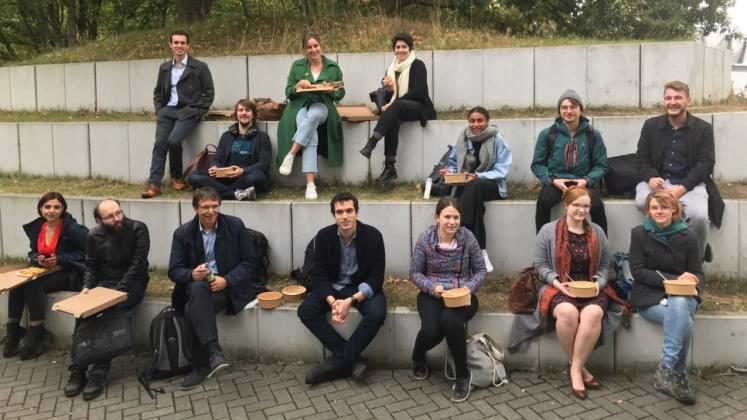
With the second cohort of PhD-researchers we aim to integrate applications with new perspectives including ontogenetic and phylogenetic studies as well as investigations about special mental states (disorders). Since the RTG has a clear focus on philosophical theory formation, all applications have a close relation to theory formation. Concerning the core concepts, we argue that the 4E distinction should be substituted by a 3E distinction resulting in “embodiment”, “enactment”, and “environmental scaffolding” (the latter being more fruitful than “embeddedness” and “extendedness”) as central concepts. Furthermore, in the meantime it seems obvious that the classical understanding of mental representation (in line with Fodor) is untenable. We have developed a minimal consensus within the RTG that we need mental representations to deliver adequate descriptions of some mental phenomena but their contents have to be characterized as flexible as well as dependent on context and explanatory interest. On this basis we aim to develop a theory of mind and cognition which denies rigid neural modules, accounts for multiple interactions between brain and body as well as integrations with the physical and social environment. To this end we already have worked out some building blocks which should be unfolded in the second phase and ideally be integrated into a new theory of the nature of cognition. We are convinced that only a joint effort and the interplay between empirical and philosophical research enable us to reach this goal.
Have a look their projects here.
First cohort (2017–2020)
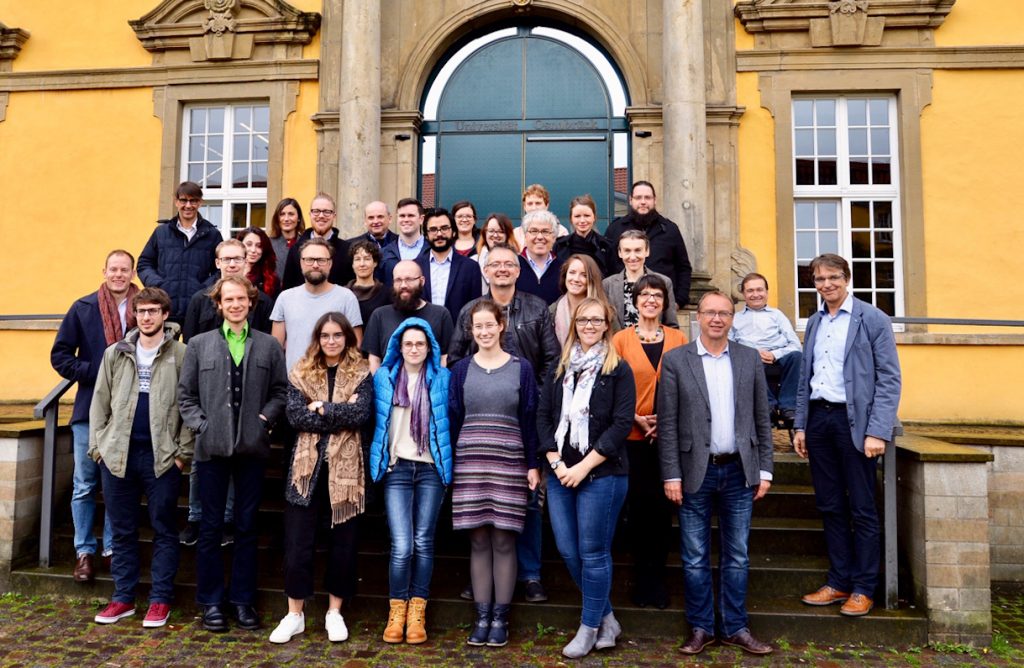
The projects of the first cohort, together with a detailed description, can be found here.